


Tree Trimming Guide: Pruning, Shaping, and Maintaining Your Trees
Healthy, beautiful trees need proper care, regular attention, and correct trimming. This tree trimming guide will show you how to prune, shape, and maintain your trees. You will also learn when is the best time to trim trees, how to trim tree limbs safely, and how consistent care helps them grow stronger and look better.
Why Tree Trimming Matters
Tree trimming is not just about looks; it is essential for safety and growth. When done right, it removes weak or diseased branches and encourages strong new growth. It allows sunlight and air to reach all parts of the tree, helping it stay healthy.
When trimming and pruning trees and bushes, your goal is to keep them safe and beautiful. Proper trimming also prevents damage from falling branches during storms.
The Difference Between Trimming and Pruning
Although many people use “trimming” and “pruning” as the same thing, they serve different goals.
- Trimming keeps trees and bushes in shape, ensuring they look balanced and tidy.
- Pruning focuses on health, removing dead or diseased branches so trees can grow better.
Both are vital, and this tree trimming guide will help you use each method wisely.
When Is the Best Time to Trim Trees?
So, when is the best time to trim trees? Timing depends on your tree type. For most, late winter or early spring is ideal because trees are dormant, meaning they are not actively growing. Trimming then allows healthy regrowth once warmer weather arrives.
- Deciduous trees like oaks or maples do well when trimmed in late winter.
- Evergreens can be trimmed in early spring.
- Flowering trees should be pruned right after blooming to protect next year’s flowers.
Avoid trimming during late fall, as frost can harm newly cut areas and cause disease.
Essential Tools for Tree Trimming
Before trimming a tree, make sure you have the right tools. Proper equipment helps you make clean cuts and reduces damage.
You will need:
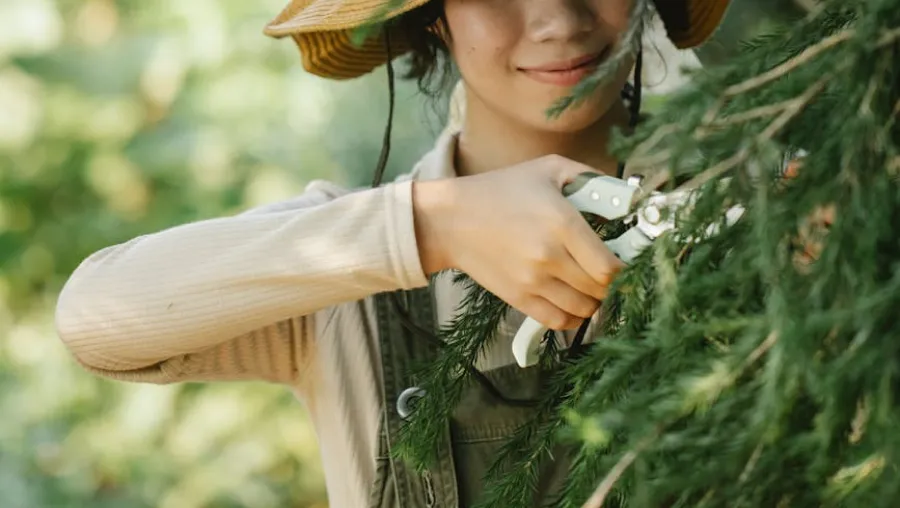
- Hand pruners for small branches under ¾ inch thick.
- Loppers for medium branches up to 2 inches thick.
- Pruning saws for large limbs.
- Pole saws for higher branches.
- Gloves and goggles for safety.
Keep tools sharp and clean after every use. Dull or dirty tools can harm trees and spread disease.
How to Trim Tree Limbs Safely
Learning how to trim tree limbs correctly helps your trees stay strong. Incorrect cuts can weaken them.
Follow these steps:
- Inspect First
Look for dead, cracked, or crossing branches and remove them. - Make the Right Cut
Trim just outside the branch collar, the raised area where the limb joins the trunk. This helps healing. - Use the Three-Cut Method
- Make the first cut underneath the branch, about a foot from the trunk.
- Make a second cut from the top a little farther out until the branch falls.
- Make a final clean cut just outside the collar.
- Avoid Over-Trimming
Do not remove more than a quarter of the canopy at once. Over-trimming weakens the tree. - Clean Up
Gather all debris to prevent pests and fungi.
How to Shape Your Trees Properly
Shaping keeps your trees strong and well-balanced. It improves both their health and appearance.
Tips for shaping:
- Start shaping when trees are young.
- Pick one main stem and remove competing ones.
- Thin crowded branches to let in light and air.
- Step back often and trim slowly to maintain symmetry.
Proper shaping also prevents breakage during heavy wind or storms.
Common Tree Trimming Mistakes to Avoid
Avoid these frequent mistakes when trimming a tree:
- Topping: Cutting the top damages structure and encourages weak shoots.
- Cutting too close: This stops the tree from healing properly.
- Using dull tools: Rough cuts invite insects and decay.
- Trimming in the wrong season: Can stunt growth or reduce flowering.
- Over-trimming: Removes too many leaves needed for food production.
When unsure, ask a professional arborist for guidance.
Benefits of Regular Tree Trimming
Routine trimming has many benefits:
- Encourages healthier growth.
- Reduces risk of falling branches.
- Improves sunlight and airflow.
- Makes your yard cleaner and more inviting.
- Extends the life of your trees.
This tree trimming guide shows that consistent care leads to stronger, safer, and more beautiful trees.
DIY vs. Professional Tree Trimming
Small branches are fine for a DIY project, but bigger limbs or tall trees should be handled by trained tree care providers. Climbing and cutting without the right gear can be dangerous.
Call a professional if:
- The tree is near power lines.
- It has disease or decay.
- Large shaping is needed.
- You are unsure about the right trimming method.
A trained arborist knows how to assess the tree’s needs and perform safe, precise trimming.
Maintaining Healthy Trees Year-Round
Beyond trimming, your trees need regular attention:
- Water regularly during dry months.
- Add mulch around the base but not against the trunk.
- Inspect often for insects or damage.
- Fertilize yearly for balanced nutrition.
- Avoid mechanical damage from tools or vehicles.
Healthy trees provide shade, beauty, and value to your property for years.
Conclusion
Tree care takes patience, observation, and regular trimming. This tree trimming guide helps you understand how to prune and shape your trees correctly, identify when is the best time to trim trees, and learn how to trim tree limbs without harm. Keep your trees healthy by avoiding common mistakes and caring for them year-round.
Tree Surgeon Atlanta, LLC Can Help
At Tree Surgeon Atlanta, LLC, we care deeply about trees and safety. With over 20 years of hands-on experience, our team provides reliable tree trimming and removal across Norcross, GA. We listen to your needs, explain every step, and deliver dependable results. Call us today at 470-892-1571 and let us help you keep your trees healthy and strong.